
WELCOME BONUS 300%
UP TO €2000 + 100
FREE SPINS
UP TO €2000 + 100
FREE SPINS
Home → Games
Casino games at Spinz Casino
Push in Blackjack: the bet returns
The Blackjack Surrender rule allows players to forfeit their hand after the dealer checks for blackjack, resulting in a payout of 50% of the stake rather than a total loss. This specific mechanic improves the Return to Player rate by approximately 0.08 percentage points compared to standard rules where the entire wager is lost immediately upon surrendering. Players effectively retain half their money on losing hands, which slightly reduces the overall house advantage during gameplay sessions at this platform.
Late surrender occurs only after the dealer verifies they do not have an initial blackjack, making it less valuable than early surrender options that can reduce the edge by up to 0.6 percentage points. Since early surrender is extremely rare in modern online casinos, the late surrender variant remains the primary method for mitigating losses on weak starting hands against strong dealer upcards. This limitation means the benefit is modest but still superior to games without any surrender option available to the player.
When comparing standard six-deck games with soft 17 standing and double after split rules, the base house edge stands at 0.46%, while adding late surrender potentially lowers this figure further if implemented correctly. The ability to push back half the bet transforms a potential full loss into a manageable expense, preserving bankroll longevity for extended play sessions without requiring complex strategy adjustments beyond basic optimal play guidelines.
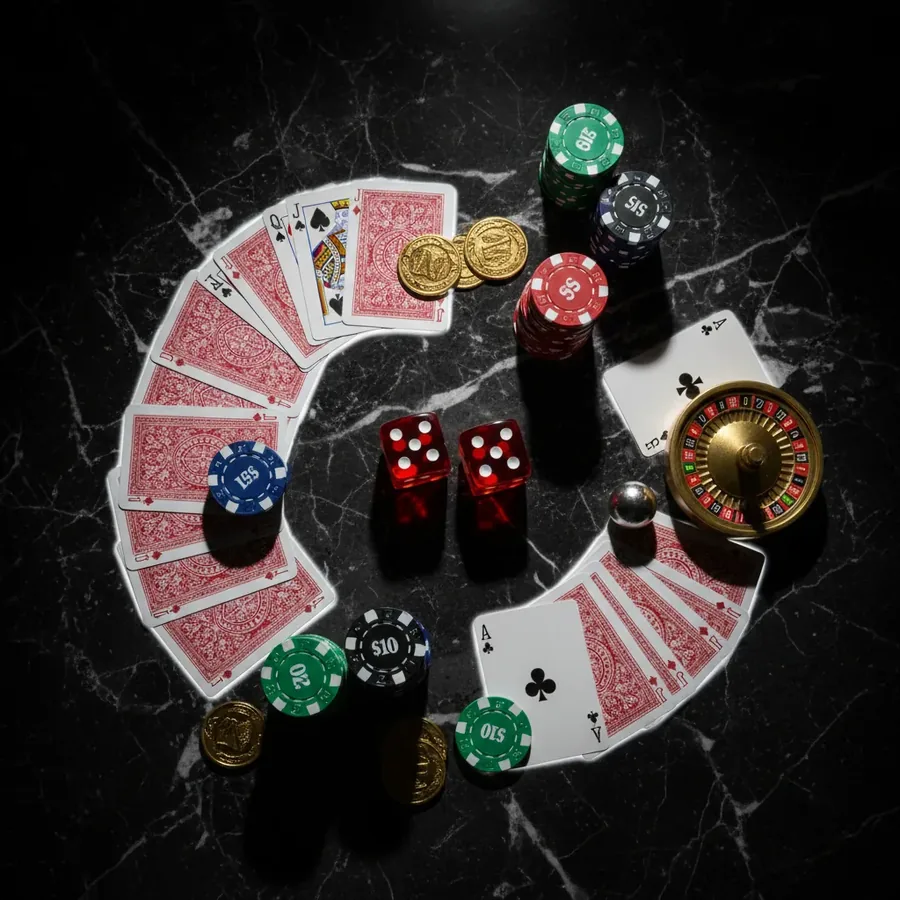
Columns and Dozens Pay 2:1 in Roulette
Column and Dozen bets on the European wheel pay 2:1, covering 12 of the 37 sectors. This payout structure applies to all wagers on the single-zero layout, which maintains a constant house edge of 2.70% across every betting option. A 10 € wager on these sections returns 20 € in profit upon success, significantly reducing volatility compared to straight-up numbers.
The American variant features 38 pockets, including a double zero, yet pays the same 2:1 for columns and dozens. The additional green slot increases the house advantage to 5.26%, nearly doubling the cost per bet compared to the European version. Players should note that this structural difference makes the European wheel mathematically superior for long-term bankroll preservation.
The Five Number Bet on the American wheel covers 0, 00, 1, 2, and 3 with a payout of 6:1. This specific wager carries an RTP of only 92.11%, resulting in a house edge of 7.89%. It is the most expensive bet on the table, adding over two percentage points to the casino's advantage compared to standard even-money bets.
Four Blackjack Hand Decisions at a Glance
Late Surrender allows players to forfeit half their bet after the dealer checks for blackjack. This rule modifier improves the overall RTP by approximately 0.08 percentage points, effectively lowering the house edge from 0.46% to 0.38%. It is a modest benefit compared to Early Surrender, which can reduce the edge by up to 0.6 percentage points but is rarely available.
Drawing one deck instead of eight reduces the house advantage by roughly 0.48 percentage points. Single-deck games with classic rules and 3:2 payouts offer an RTP of 99.85%, making them among the most favorable options. However, casinos often compensate for this low edge by enforcing 6:5 payouts on blackjacks, which adds 1.39 percentage points to the house advantage.
Blackjack paying 6:5 instead of 3:2 drastically increases the casino's hold on the game. For a 10 € bet, a natural blackjack yields 12 € instead of 15 €, costing the player 3 € per hand. This single rule change adds 1.39 percentage points to the house edge, outweighing the impact of any other rule variation in the game.
Liberal Vegas Strip rules combine Soft 17, Double After Split, Resplitting, and Late Surrender. These conditions create an optimal environment with a house edge of just 0.28% and an RTP of 99.72%. Players using perfect basic strategy on this variant can expect the lowest possible loss rate per hour compared to standard tables.
Roulette Wheel with 37 vs 38 Pockets
The European wheel contains 37 pockets, ranging from 1 to 36 plus a single zero. This configuration results in a house edge of 2.70% for all bets, including straights, splits, and dozens. The consistent edge ensures that the theoretical return remains stable regardless of the specific wager placed on the layout.
The American wheel expands to 38 pockets by adding a second zero to the European layout. This extra pocket doubles the house advantage to 5.26% for standard bets like red/black or dozens. The increased edge means players lose money twice as fast on average compared to playing the European variant with identical stake sizes.
Payouts for corner bets remain 8:1 on both wheel types, but the probability of winning differs significantly. On the European wheel, the chance is 10.81%, while the American wheel reduces it to 10.53%. This slight decrease in win frequency contributes directly to the higher house edge observed on the American layout.
The Straight bet pays 35:1 on both wheels, offering the highest multiplier for single-number wagers. Despite the identical payout, the presence of the extra zero on the American wheel lowers the hit frequency from 2.70% to 2.63%. This mathematical disadvantage accumulates over time, eroding the player's bankroll more rapidly on the 38-pocket version.
Read Statistics of Last 500 Rounds Correctly
RTP represents a theoretical long-run average over hundreds of thousands of spins, never a forecast for one session. A reported RTP of 98.15% for blackjack does not guarantee a 1.85% loss over 500 hands due to high variance. Short-term results can deviate significantly from the expected value, leading to wins or losses far exceeding the statistical edge.
Volatility determines the size and frequency of payouts during a limited sample size like 500 rounds. High-variance games may produce long losing streaks followed by large wins, while low-variance games offer frequent small payouts. Players observing 500 rounds should expect outcomes that align closely with the house edge only if the sample size is substantially larger.
The House Edge is the average amount retained from each bet over the long term, not a fixed loss per session. In 500 rounds of roulette, a player might lose exactly 2.70% of their total wagered amount, but could also walk away with a 20% profit. Statistical models predict trends over millions of spins, rendering short-term statistics unreliable for predicting immediate future results.
Standard deviation measures the dispersion of outcomes around the mean for a given game. Baccarat Player has a standard deviation of 0.95, indicating relatively predictable results compared to craps with a deviation of 1.00. Over 500 rounds, a lower standard deviation suggests fewer extreme swings, though the final result still depends heavily on luck rather than the calculated edge.
Game categories at a glance
| Category | Examples | Stakes From | Highlight |
|---|---|---|---|
| Slots | Nitropolis 4, Big Bass Bonanza, Gonzo's Quest | 0,10 EUR | thousands of titles |
| Table games | Roulette, Blackjack, Baccarat | 0,50 EUR | classic rules |
| Live casino | Mega Roulette, PowerUP Roulette | 0,20 EUR | real dealers |
| Jackpot games | Mega Moolah, Divine Fortune, Age of the Gods | 0,20 EUR | progressive pools |
| Instant games | Aviator, Plinko, Mines | 0,10 EUR | fast rounds |
| Video poker | Jacks or Better, Deuces Wild | 0,25 EUR | strategy based |
Video Poker: check payout table before betting
Deuces Wild Full Pay tables offer an RTP of 100.76% with a negative house edge of -0.76%. This unique scenario provides a positive expected value for players using perfect strategy, making it the only mass-market game with such advantages. The payout schedule includes 800 for a Natural Royal and 200 for Four Deuces, critical for achieving the top-tier return.
Not So Ugly Ducks (NSUD) tables reduce the Five of a Kind payout from 15 to 16 credits but lower others. This adjustment drops the RTP to 99.73%, creating a house edge of 0.27% instead of a player advantage. Players must verify the full pay table, as minor changes in mid-tier payouts significantly alter the long-term profitability of the game.
Illinois Deuces variants further reduce the return, dropping the RTP to 98.91% with a house edge of 1.09%. This version offers less favorable terms compared to both Full Pay and NSUD tables, increasing the cost per hour of play. Checking the payout structure is essential to avoid games with suboptimal returns when better alternatives are available.
Wild Royals pay 25 credits in Deuces Wild, while Natural Royals pay 800, requiring five non-joker cards. Achieving a Five of a Kind pays 15 credits on Full Pay tables but only 16 on NSUD, despite the name suggesting inferiority. The complexity of optimal strategy demands careful attention to these specific payout tiers to maintain the theoretical RTP.
Video Poker 9/6: What the Two Numbers Mean
The notation 9/6 in Video Poker refers to the specific payout structure for Full House and Flush hands, which are paid at nine coins and six coins respectively. This ratio is a critical benchmark because it determines the overall Return to Player percentage of the machine, directly impacting long-term profitability for the user.
A standard 9/6 Jacks or Better game offers an RTP of 99.54% when played with perfect basic strategy, significantly outperforming lower-paying variants like 8/5 tables. The difference in payouts reduces the house edge from approximately 1.36% to just 0.46%, making the higher paying version mathematically superior for consistent play sessions.
Choosing a 9/6 table ensures that every dollar wagered has a higher probability of returning to the player over hundreds of thousands of hands compared to lesser versions. Players seeking optimal value should always verify this paytable before starting, as even small changes in Full House or Flush payouts drastically alter the expected return on investment.
Straight, Split, and Corner: Three Terms Briefly Explained
A Straight bet covers four consecutive numbers on the roulette layout, such as 1-2-3-4, and pays out at odds of 11 to 1. This type of wager is considered a street bet because it aligns horizontally across three columns, offering a moderate risk profile with a fixed payout regardless of which specific number hits within the chosen sequence.
A Split bet allows players to place chips on the line between two adjacent numbers, covering exactly two outcomes with a payout of 17 to 1. This strategy is useful for targeting specific pairs while maintaining a lower total stake than placing separate bets on each individual number, effectively doubling the coverage area per chip placed.
A Corner bet sits on the intersection of four numbers, creating a square shape on the felt and paying 8 to 1 upon success. This bet type provides excellent value by covering multiple potential winning combinations simultaneously, though it requires precise placement of chips to ensure the dealer recognizes the intended four-number selection correctly.
9/6 table: nine for Full House, six for Flush
The term 9/6 specifically denotes that a Full House pays nine coins while a Flush pays six coins in a five-coin maximum bet scenario. This particular paytable structure is found in high-quality Video Poker machines and is essential for achieving the theoretical Return to Player rate of 99.54% for Jacks or Better games.
Lower variations such as 8/5 or 9/5 tables reduce these payouts, which immediately increases the house edge and decreases the player's long-term expected return. A 9/6 table remains the gold standard for video poker enthusiasts who want to minimize the casino advantage and maximize their bankroll efficiency over extended playing periods.
Understanding these specific payout ratios helps players identify which machines offer the best mathematical value versus those designed to extract more money from less informed gamblers. Always check the paytable before sitting down, as the difference between a 9/6 and an 8/5 machine can result in a significant loss of expected winnings over time.
Straight, Split, and Corner in direct comparison
Comparing Straight, Split, and Corner bets reveals distinct differences in risk and reward, with payouts ranging from 8 to 1 up to 17 to 1. The Corner bet covers four numbers but pays only 8 to 1, resulting in a lower probability of hitting compared to the Split bet which covers only two numbers yet pays 17 to 1.
The Straight bet occupies the middle ground by covering three numbers and paying 11 to 1, offering a balanced approach between frequency and payout size. Each bet type utilizes different areas of the roulette table layout, requiring players to understand the geometry of the wheel to place chips accurately and avoid ambiguous bets that might be interpreted incorrectly by the dealer.
Selecting the right bet depends on the player's risk tolerance and desired volatility, with Corners providing more frequent small wins and Splits offering higher payouts for less frequent hits. Understanding these mechanics allows for better bankroll management, as knowing the exact odds helps in deciding how much to wager on each specific type of roulette bet during a session.
RNG Roulette vs. Live Table: Four Clear Differences
Random Number Generator Roulette operates entirely on software algorithms, producing results instantly without any physical wheel or dealer interaction involved in the process. This digital format allows for faster gameplay cycles, enabling players to complete many more spins per hour compared to traditional live dealer tables which require time for ball movement and betting windows.
Live Dealer Roulette features a real human croupier managing a physical wheel, providing social interaction and visual transparency that RNG games cannot replicate for some users. While the house edge remains identical at 2.70% for European wheels, the pace is slower due to procedural delays, affecting the total amount wagered and potentially increasing variance over shorter timeframes.
RNG versions often include additional statistics and history panels visible on screen, helping players track trends and make informed decisions based on previous outcomes displayed digitally. Live tables rely on physical observation of the wheel and ball, offering a more authentic casino atmosphere but lacking the convenient data analytics tools available in fully automated digital gaming environments.
Contact
Live - online chat
Banking









Providers












Spinz Casino 2026